RTT vs. Hypnotherapy: Key Differences Explained


TL;DR:
Rapid Transformational Therapy (RTT) is a brief, immersive approach that targets subconscious root causes, often achieving results in one to three sessions. Traditional hypnotherapy uses repeated suggestions over multiple sessions to gradually manage symptoms and reinforce positive behaviors. Both therapies are supported by research but work best as supplementary tools alongside conventional medical or psychological treatment for serious conditions.
Rapid Transformational Therapy (RTT) and traditional hypnotherapy are two distinct therapeutic methods that both use hypnosis but differ fundamentally in their goals, techniques, and session structure. Understanding the rtt versus hypnotherapy differences helps you choose the right approach for your mental health needs. RTT, developed by Marisa Peer, targets the subconscious root causes of limiting beliefs and emotional blocks. Traditional hypnotherapy focuses on symptom management through positive suggestion and behavioral reinforcement. Both have real clinical value, but they serve different purposes and suit different clients.
What are the core RTT versus hypnotherapy differences?
RTT is defined as an integrative therapy that combines hypnotherapy, CBT, psychotherapy, and NLP to identify and reprogram subconscious limiting beliefs. Traditional hypnotherapy, by contrast, primarily uses guided suggestion and visualization to shift behavior and reduce symptoms over time. The distinction matters because the two methods operate at different depths of the mind and on different timelines.

RTT goes beyond relaxation and positive reinforcement. It uses regression techniques to locate the origin of a belief, such as a childhood experience that created a fear of failure, and then actively reframes it during the session. Traditional hypnotherapy rarely digs into root causes with that level of precision. It works by repeating positive suggestions across multiple sessions until new patterns take hold.
Hypnosis itself is a collaborative state of focused attention, not a loss of control. Both therapies use this state, but RTT uses it as a diagnostic and transformational tool, while traditional hypnotherapy uses it primarily as a delivery mechanism for suggestion. That difference in intent shapes everything about how each therapy feels and what it produces.
How do RTT and hypnotherapy sessions differ in structure?
The most practical difference between the two therapies is session count and pacing. RTT is structured as 1–3 sessions, while traditional hypnotherapy typically requires multiple sessions spread across weeks or months. That gap reflects the depth of work each method attempts.
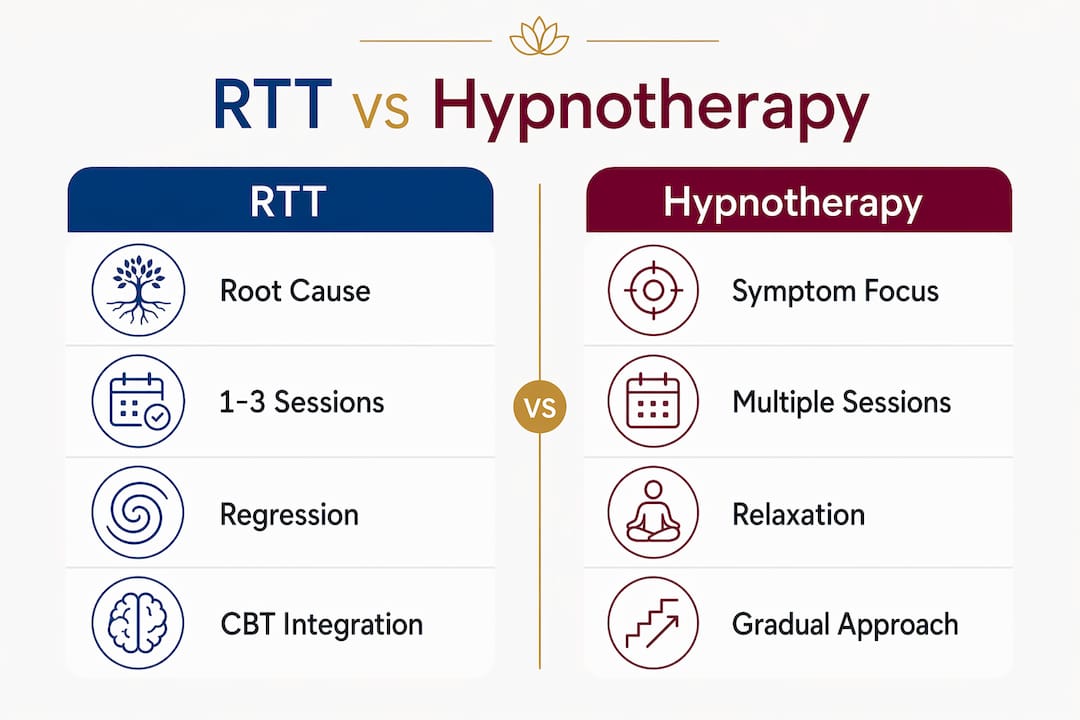
A single RTT session usually runs 90–120 minutes. The therapist guides you into hypnosis, uses regression to surface the root belief, reframes it, and then creates a personalized audio recording for you to use afterward. Traditional hypnotherapy sessions are shorter, often 45–60 minutes, and build incrementally toward change through repeated reinforcement.
Here is what a typical RTT process looks like from start to finish:
Pre-session consultation to identify the presenting issue and set clear goals
Hypnotic induction to bring you into a focused, receptive state
Regression work to locate the origin of the limiting belief or emotional pattern
Reframing the meaning of past experiences at the subconscious level
Transformation recording created specifically for your issue, listened to daily for 21–30 days
That fifth step is where many clients underestimate the process. Post-session audio listening for 21–30 days is not optional. It reinforces new neural pathways and prevents old patterns from returning. Skipping it is the single most common reason clients do not hold their gains.
Traditional hypnotherapy does not typically include this kind of structured follow-up. Progress depends on returning for sessions and on the cumulative effect of repeated suggestion over time.
Pro Tip: If you choose RTT, treat the daily audio recording like a prescription. Set a phone alarm for the same time each day and listen for the full 21–30 day period. The session plants the seed; the recording grows it.
What techniques does each therapy use?
The therapeutic toolkit separates RTT and traditional hypnotherapy more clearly than any other factor. RTT draws from four distinct disciplines to create a multimodal approach. Traditional hypnotherapy works within a narrower, more focused framework.
RTT techniques include:
Hypnotic regression to access memories and subconscious beliefs
CBT-style reframing to challenge and replace distorted thinking patterns
NLP techniques to shift language patterns and internal representations
Psychotherapeutic dialogue to process emotional content during the session
Personalized transformation recordings for post-session reinforcement
Traditional hypnotherapy techniques include:
Guided relaxation and hypnotic induction
Direct and indirect positive suggestion
Visualization and mental rehearsal
Anchoring desired emotional states
Gradual behavioral conditioning across sessions
The comparison below shows how the two approaches differ across key dimensions:
Dimension | RTT | Traditional Hypnotherapy |
Primary goal | Resolve root cause | Manage symptoms |
Session count | 1–3 sessions | Multiple over weeks or months |
Core technique | Regression and reframing | Positive suggestion |
Modalities used | Hypnosis, CBT, NLP, psychotherapy | Hypnosis and suggestion |
Post-session work | Daily audio for 21–30 days | Return sessions |
Speed of change | Rapid, often after one session | Gradual, cumulative |
RTT uniquely integrates hypnosis with psychotherapy, CBT, and NLP to precisely identify the origin of limiting beliefs and then rapidly reframe them. That integration is what makes RTT feel different from a standard hypnotherapy session. You are not just receiving suggestions. You are actively uncovering and rewriting the story your subconscious has been running on.
Traditional hypnotherapy’s strength lies in its accessibility and gentleness. For clients who need gradual, low-intensity support, repeated sessions of positive suggestion can build real momentum. Mindful hypnotherapy approaches that combine hypnosis with mindfulness practices can enhance these effects, though changes remain gradual.
What does the evidence say about RTT and hypnotherapy?
The research base for both therapies is growing, and the findings are worth knowing before you choose. A single personalized hypnosis session can produce significant, immediate reductions in stress and anxiety, even in people who have never experienced hypnosis before. That finding supports the case for both RTT and hypnotherapy as fast-acting tools for acute distress.
For traditional hypnotherapy, a systematic review found that mindful hypnotherapy reduces psychological distress with a Hedges’ g of 0.61 and increases mindfulness with a Hedges’ g of 1.38. A Hedges’ g above 0.5 is considered a medium-to-large effect in psychological research. That means hypnotherapy is not a fringe practice. It produces measurable, clinically meaningful change.
“Neither RTT nor traditional hypnotherapy should replace conventional medical or psychotherapy treatments for severe mental health conditions. They are most effective used as adjuncts alongside standard care such as CBT or medication.”
That point deserves emphasis. If you are managing a severe anxiety disorder, PTSD, or clinical depression, RTT and hypnotherapy work best as part of a broader treatment plan, not as standalone replacements for psychiatric care or evidence-based psychotherapy. For moderate stress, limiting beliefs, low self-esteem, sleep issues, and burnout, both methods have strong track records.
Most clients report significant breakthroughs in just 1–3 RTT sessions, with deeper and faster transformation compared to the gradual improvement typical of traditional hypnotherapy. Speed matters to many clients, especially those dealing with work pressure, expat adjustment stress, or time constraints that make weekly therapy sessions impractical.
How do RTT and hypnotherapy compare in client experience?
The lived experience of each therapy is genuinely different, and knowing what to expect helps you commit more fully. RTT sessions are intense and emotionally active. You may surface memories you have not thought about in years. You will be asked to interpret those memories in new ways, often with the therapist guiding you toward a reframe in real time. Many clients describe the experience as both surprising and deeply relieving.
Traditional hypnotherapy sessions feel calmer and more passive. You receive suggestions while in a relaxed state, and the work happens gradually beneath conscious awareness. Some clients prefer this gentler pace, especially if they find emotional intensity difficult to manage.
What clients typically experience in RTT:
Unexpected emotional releases during regression
A sense of clarity about where a pattern originated
Immediate shifts in how they interpret a past experience
Strong motivation to complete the post-session audio work
Noticeable changes in thinking and behavior within days
What clients typically experience in traditional hypnotherapy:
Deep relaxation during and after sessions
Gradual reduction in anxiety or unwanted behaviors
Increased receptivity to positive self-talk
Slower but steady progress over multiple sessions
Clients often overlook the post-session audio work in RTT, which is the most critical factor in maintaining therapeutic gains. This is not a passive process. The audio recording is personalized to your specific issue and designed to continue the reframing work while you sleep or rest. Skipping it is like stopping antibiotics halfway through the course.
Pro Tip: Before booking either therapy, ask the practitioner how they measure progress and what they expect from you between sessions. A good therapist will have a clear answer. That conversation tells you a lot about how structured and results-focused their practice is.
For expats managing the compounded stress of relocation, cultural adjustment, and professional pressure, the difference between RTT and hypnotherapy often comes down to urgency and depth. RTT suits clients who want to resolve a specific issue quickly. Hypnotherapy suits those who prefer a gradual, low-pressure process.
Key takeaways
RTT delivers faster, deeper transformation by targeting subconscious root causes, while traditional hypnotherapy builds gradual change through repeated positive suggestion across multiple sessions.
Point | Details |
Session count differs significantly | RTT requires 1–3 sessions; traditional hypnotherapy spans weeks or months of regular appointments. |
RTT uses a multimodal approach | RTT combines hypnosis, CBT, NLP, and psychotherapy to address root causes, not just symptoms. |
Post-session audio is non-negotiable in RTT | Listening to personalized recordings daily for 21–30 days is what locks in RTT’s results. |
Both therapies have research support | Hypnotherapy shows a medium-to-large effect on distress reduction; RTT clients report rapid breakthroughs in 1–3 sessions. |
Neither replaces conventional care | RTT and hypnotherapy work best alongside CBT, medication, or standard psychotherapy for serious conditions. |
What i’ve learned from using both approaches with clients
After years of working with anxious expats, burned-out professionals, and trauma survivors, I have come to see RTT and traditional hypnotherapy as tools with different jobs. RTT is a precision instrument. It is best when a client can name a specific pattern, such as chronic self-doubt, fear of failure, or a deep-seated belief that they are not enough, and wants to get to the bottom of it fast. The regression work in RTT often surfaces the exact moment a belief was formed, and reframing that moment changes how the client relates to it permanently.
Traditional hypnotherapy is better suited to clients who need a gentler entry point. If someone is highly anxious about the therapy process itself, or if they have had difficult experiences with emotionally intense work, starting with suggestion-based hypnotherapy builds trust and reduces resistance before deeper work begins.
What I find most underappreciated is the role of RTT in anxiety treatment specifically. Anxiety often has a very clear origin story buried in the subconscious. RTT finds it in a way that talk therapy alone rarely does, because the subconscious does not respond to logic. It responds to the kind of direct, experiential reframing that hypnosis makes possible.
My honest advice: do not choose between RTT and hypnotherapy based on which sounds less scary. Choose based on what you actually need. If you want to understand and resolve the root of a pattern quickly, RTT is the stronger tool. If you want gradual, supportive reinforcement of new behaviors, hypnotherapy delivers that well. And if you are working through something serious, use either as a complement to your existing care, not a replacement for it.
— Heske
Ready to experience RTT for yourself?
Hesketherapy offers specialized RTT sessions designed for English-speaking expats and international clients in Madrid and online. Whether you are dealing with anxiety, burnout, low self-esteem, or emotional blocks that talk therapy has not shifted, RTT’s targeted approach gets to the root of the issue in 1–3 sessions.
Every session at Hesketherapy is personalized, professionally guided, and followed by a custom transformation recording built around your specific issue. You also get clear support on how to use the post-session audio for maximum results. If you are ready to stop managing symptoms and start resolving causes, explore RTT therapy at Hesketherapy and book a free discovery call to find out if it is the right fit for you.
FAQ
What is RTT therapy and how does it work?
RTT, or Rapid Transformational Therapy, is an integrative method developed by Marisa Peer that combines hypnosis, CBT, NLP, and psychotherapy to locate and reframe subconscious limiting beliefs. It typically delivers results in 1–3 sessions, followed by 21–30 days of personalized audio reinforcement.
What is the main difference between RTT and hypnotherapy?
RTT targets the root cause of a belief or pattern through regression and active reframing, while traditional hypnotherapy uses repeated positive suggestion to gradually shift behavior and reduce symptoms over multiple sessions.
How many sessions does RTT require compared to hypnotherapy?
RTT requires 1–3 sessions to achieve significant results, while traditional hypnotherapy typically involves ongoing sessions over weeks or months to build cumulative change.
Is hypnotherapy effective for anxiety and stress?
Yes. Research shows a single hypnosis session can produce significant reductions in stress and anxiety, and mindful hypnotherapy demonstrates a medium-to-large effect on reducing psychological distress in systematic reviews.
Can RTT or hypnotherapy replace conventional therapy?
Neither RTT nor hypnotherapy should replace standard psychiatric care or evidence-based psychotherapy for severe conditions. Both are most effective when used alongside conventional treatments such as CBT or medication as part of a broader care plan.
Recommended
Comments